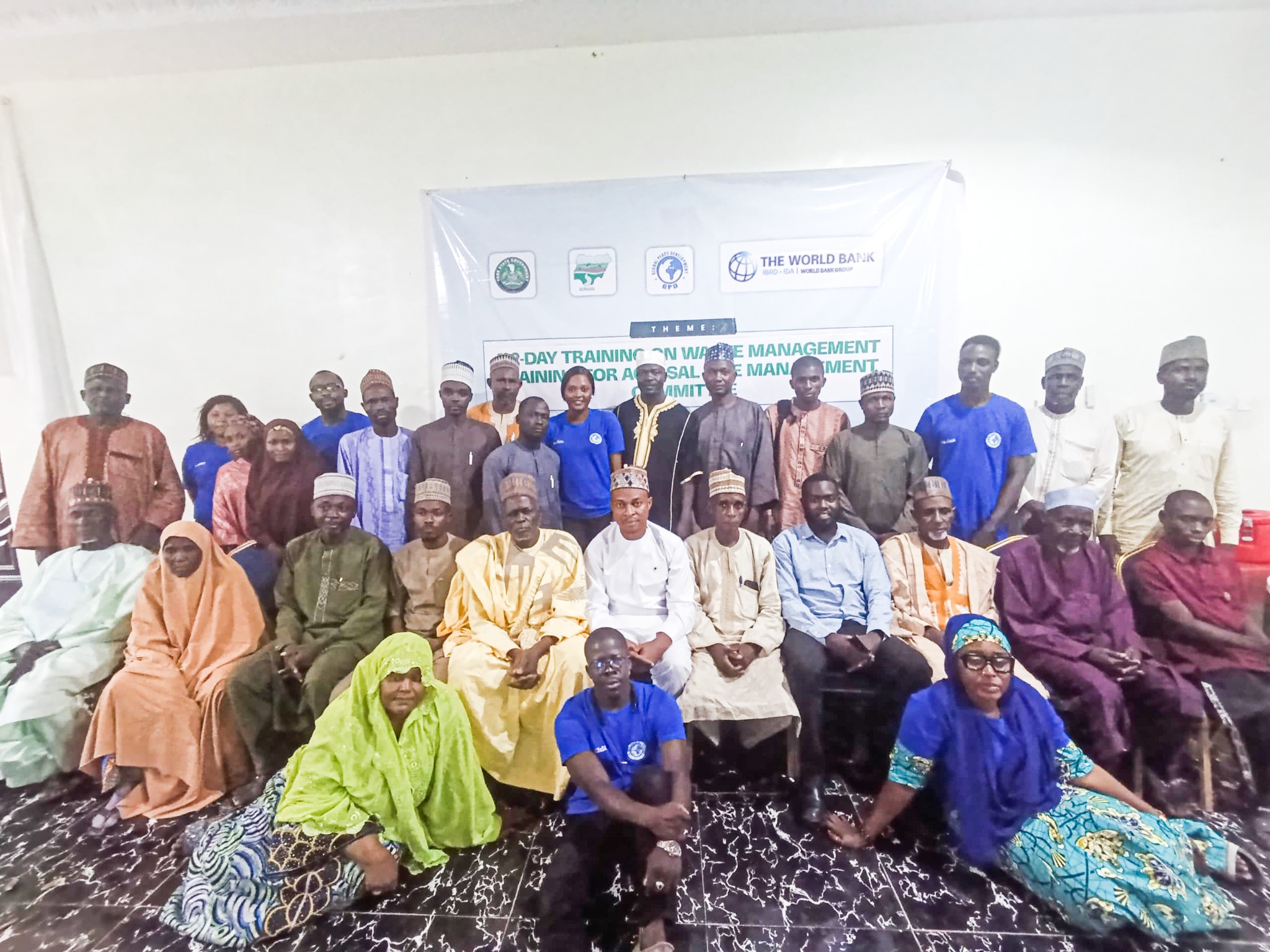
Global Peace Development, in partnership with Yobe ACReSAL, convened a two-day intensive training in Damaturu, Yobe State, to strengthen the capacity of Site Management Committees (SMCs) on effective waste management, drainage maintenance, and flood prevention. The training brought together community leaders, youth representatives, traders, and environmental stakeholders, with the overall goal of equipping participants with practical knowledge and strategies that would enhance resilience against flooding, contamination, and health risks caused by poor waste management practices.
At the heart of the training was a detailed exploration of the waste management hierarchy—prevention, reduction, reuse, recycling, recovery, and safe disposal. Facilitators emphasized that prevention and reduction remain the most effective and least costly approaches, while recovery and disposal should be the last options when other interventions have been exhausted. Participants analyzed the waste profile of Yobe State, which consists largely of organic waste from households and markets, recyclable materials such as plastics, metals, and glass, hazardous waste from healthcare facilities, construction debris from urban expansion, and mixed waste. Each category was examined in terms of its risks: organic waste contributing to blocked drains and disease outbreaks, plastics and non-biodegradables polluting waterways, and hazardous waste posing serious threats to human and environmental health.
Key highlights from the training included practical innovations and solutions:
- Composting initiatives: Market waste such as spoiled vegetables can be turned into organic fertilizer to boost agricultural productivity, reduce dependence on chemical fertilizers, and minimize greenhouse gas emissions from open dumping.
- Small-scale recycling projects: Simple innovations such as plastic bottle collection and repurposing old tyres into furniture, playground equipment, and construction materials were presented as low-cost, high-impact solutions.
- Biogas technology: Participants were introduced to the use of animal and market waste in biogas systems to produce clean cooking gas and organic fertilizer. Case studies included Jigawa Farms, which produces household biogas, Nsukka’s biogas plant, which powers institutional kitchens, and community-level biogas digesters in Northern Nigeria that have reduced deforestation and reliance on firewood.
- Advanced recycling technologies: Facilitators highlighted pilot projects in Nigeria and beyond that convert plastics into paving tiles, textiles, and other durable products. These technologies demonstrate how waste can become an economic resource when properly managed.
- Mechanical-biological treatment (MBT): The concept of stabilizing organic waste while simultaneously recovering recyclables was discussed as a medium- to long-term investment that can serve urban areas like Damaturu.
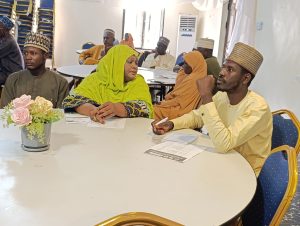
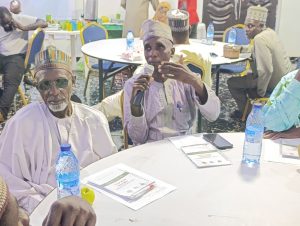
Beyond technologies, the training stressed community-driven approaches as a cornerstone of resilience. Practical, grassroots actions such as piloting waste bins in crowded marketplaces, organizing clean-up campaigns before the rainy season, and engaging schools in environmental clubs were discussed as sustainable models for building collective responsibility. Participants were particularly inspired by examples from Nigerian states like Ogun and Cross River, where composting projects have directly improved crop yields and household incomes.
On drainage maintenance, facilitators emphasized the importance of forming and strengthening Drainage Maintenance Committees that involve local leaders, traders, and youth. These committees were encouraged to develop schedules for regular seasonal clean-ups, especially before and during the rainy season, to prevent blockages that often result in flooding. Installing litter traps in strategic drainage points, mobilizing households for “pre-rainy season campaigns,” and ensuring that protective equipment and safe tools are available were highlighted as practical steps. A notable case study from Accra, Ghana showcased how community-organized “drain days” not only improved drainage systems but also reduced incidences of waterborne diseases and built trust between residents and local authorities.
The training concluded with a strong message: waste is not just a problem but also a resource, and communities have the power to transform their environment through collective action. By combining simple, low-cost innovations with structured community strategies, Site Management Committees in Yobe State can drive long-term change, reduce disaster risks, and foster healthier, more resilient communities. The lessons learned from this training are expected to feed into broader state-level environmental management strategies, setting the stage for replication in other flood-prone areas of Nigeria.
Leave a Reply